Scroll
Who They Were
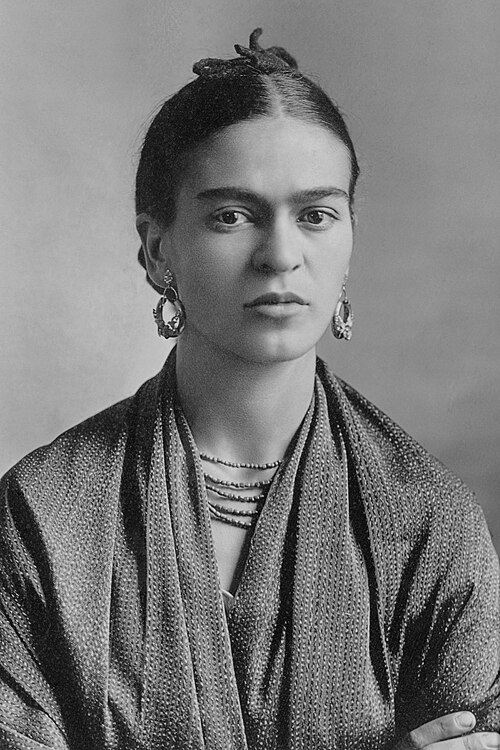
She paints herself one hundred and forty-three times because she is, in her words, the subject she knows best — the one she is most often alone with. Frida Kahlo is barely five feet tall, lives in pain for almost every day of her forty-seven years, and produces some of the most unflinching self-portraits in the history of art.
She is eighteen when the bus she's riding is struck by a tram in Mexico City. A handrail pierces her pelvis. Her spine and pelvis are broken in multiple places. She paints lying on her back, using a mirror her mother installs over the bed, and never stops painting again.
She marries the muralist Diego Rivera twice. She has affairs with Trotsky and likely with Josephine Baker. She wears traditional Tehuana dresses as armor. She joins the Communist Party. She refuses to soften herself for anyone. She becomes, decades after her death, an icon for every person who insists on being fully, unmistakably themselves.
What They Stood For
She made her own face, her own body, her own pain into her primary subject. She refused to look away from herself and refused to let anyone else look away either.
She wove indigenous Mexican color, costume, and iconography through every painting. Her art was a declaration that Mexican art was world art.
She defied disability, gender expectations, marital expectations, political expectations. She lived loudly because the world kept telling her to be quiet.
Ask the Legend
Powered by AI trained on their public legacy — interviews, speeches, and documented beliefs.
💌 Want Frida Kahlo to speak directly to you?
Get a Personal Message — $9.99Explore Frida Kahlo's Legacy
As an Amazon Associate, AskTheLegends.com earns from qualifying purchases.
Their Legacy
Born in the Blue House in Mexico City, the house she will die in 47 years later.
A streetcar collision leaves her with lifelong injuries — and pushes her into painting.
Marries the muralist 20 years her senior in what she called her "second accident."
The Louvre buys one of her paintings — the first work by a Mexican artist of the 20th century in its collection.
Dies in the Blue House, her final diary entry reading: "I hope the exit is joyful — and I hope never to return."
Did You Know?
01
After her devastating 1925 bus accident, Frida was bedridden for months and her mother had a special easel built so she could paint lying down. That accident—not inherent talent—became the catalyst for her becoming an artist.
02
Frida's private journal, written in the last decade of her life, contains more raw emotional truth than many of her paintings. She wrote and drew in it daily, calling it her most intimate conversation with herself.
03
The 1925 bus crash fractured her spine, pelvis, ribs, and collarbone. She endured decades of chronic pain and multiple surgical interventions, yet refused to let suffering silence her voice or stop her from creating.
04
Before, during, and after her marriage to Rivera, Frida had passionate relationships with both men and women, including photographer Nickolas Muray and women in her inner circle—her sexuality was as fluid and honest as her art.
In Their Own Words
Feet, what do I need you for when I have wings to fly?
I paint myself because I am so often alone and because I am the subject I know best.
I am my own muse, I am the subject I want to know more about. The subject I know best. The subject I want to know about is myself.
Quotes sourced from public record.
The Question of Our Time
What would Frida Kahlo say about social media and self-portraiture?
She would likely see the impulse as honest—people wanting to witness themselves, to say 'I exist, I matter.' But she would warn against the performance of it, against painting a false face for approval. Frida painted her own truth relentlessly: her monobrow, her pain, her desires, her rage. She would tell you that a thousand likes mean nothing if the image is not real. The camera, the filter, the screen—these are just tools. What matters is whether you are brave enough to show your actual self, not the self you think others want to see.
— In the voice of Frida Kahlo, generated by AI
Go Deeper
Books
Hayden Herrera's definitive biography and "The Diary of Frida Kahlo" — her own painted journal in facsimile.
Read Her Diary on AmazonMusic
Mexican boleros, rancheras, and the Tehuana folk music that filled the Blue House.
Hear Her Mexico on AmazonDocumentary
"Frida" with Salma Hayek and the documentary series that take you inside the Blue House.
Watch Her Story on AmazonYou Might Also Ask…
Art. Pain. Truth.. They are remembered as one of the most influential figures in Art & Science.
Frida Kahlo is known for their groundbreaking impact on Art & Science. Their legacy continues to inspire millions worldwide.
Yes. AskTheLegends.com uses AI to simulate conversations with Frida Kahlo, letting you ask questions and get responses inspired by their real words and philosophy.
Browse Frida Kahlo books, albums, and documentaries on Amazon using the legacy links at the bottom of this page.
Daily Wisdom from the Legends
Get daily wisdom from the legends — free. Straight to your inbox.