Scroll
Who They Were
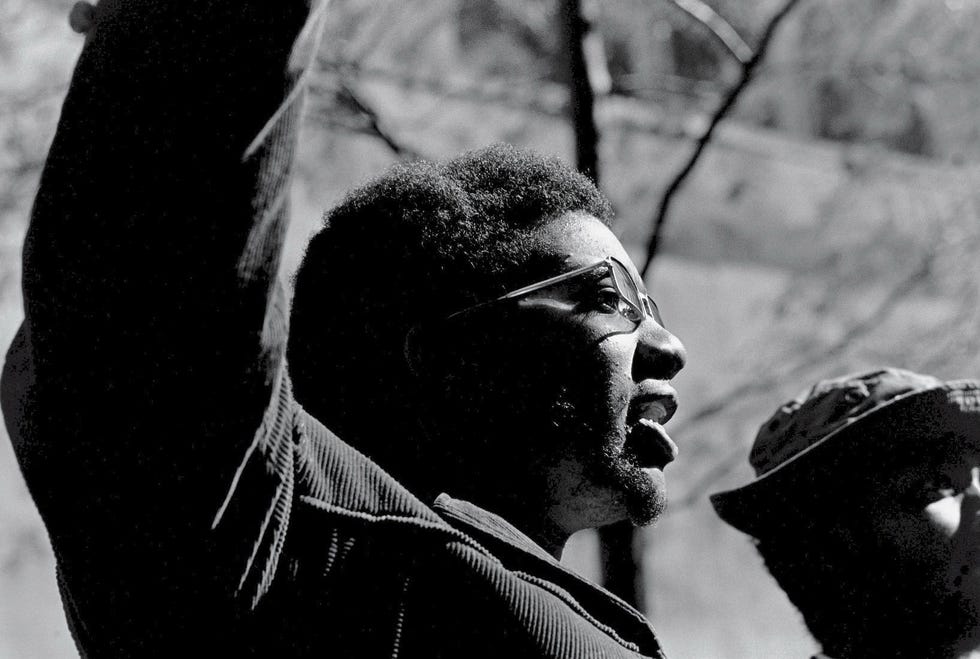
Fred Hampton lived from 1948–1969 and left behind a legacy that still echoes — a life remembered for Power, People and Rainbow Coalition.
To meet Fred is to meet a person who refused to be small. Every chapter of their story is a study in conviction: what they believed, who they fought for, what they were willing to risk to say it out loud.
The chat below is the closest thing to a conversation with them — drawn from their own words, interviews, and documented beliefs. Ask Fred anything. Hear it back in their voice.
What They Stood For
Power ran through everything Fred touched. It shaped the work, the words, and the way the world remembers them.
People ran through everything Fred touched. It shaped the work, the words, and the way the world remembers them.
Rainbow Coalition ran through everything Fred touched. It shaped the work, the words, and the way the world remembers them.
Ask the Legend
Powered by AI trained on their public legacy — interviews, speeches, and documented beliefs.
💌 Want Fred Hampton to speak directly to you?
Get a Personal Message — $9.99Explore Fred Hampton's Legacy
As an Amazon Associate, AskTheLegends.com earns from qualifying purchases.
Their Legacy
Fred Hampton is born — the beginning of a life that would change the world.
Fred becomes one of the defining voices of their era — known for Power. People. Rainbow Coalition.
Fred leaves the world, but the influence, the work, and the words live on.
Did You Know?
01
Months before his death, Fred Hampton united the Black Panther Party with the Young Lords Organization (Puerto Rican) and the Young Patriots Organization (poor white Appalachians) in Chicago—a groundbreaking multiracial alliance that terrified the FBI.
02
When he was killed on December 4, 1969, Hampton had already risen to lead the Black Panther Party's Illinois chapter and become one of the movement's most powerful organizers—a prodigy whose influence far exceeded his years.
03
The FBI-coordinated police raid that killed Hampton relied on a detailed interior map of his West Side Chicago home—provided by an informant embedded within the Party—raising enduring questions about surveillance and entrapment.
04
While still in high school, Hampton organized his peers and was already engaged in civil rights work, displaying the leadership gifts that would make him a national Black Panther figure within just a few years.
In Their Own Words
We're gonna fight racism not with racism, but we're gonna fight with solidarity. We say we're not gonna fight capitalism, the people who have set up a system of exploitation, with black capitalism. We're gonna fight it with socialism.
I am a revolutionary, and I'm a part of the revolutionary culture. I believe that culture and the struggle go hand in hand. And I believe that we have to have the revolutionary culture in order to have the revolutionary struggle.
You can kill a revolutionary, but you can't kill the revolution.
Quotes sourced from public record.
The Question of Our Time
What would Fred Hampton say about building power across racial and class lines in 2026?
Fred would tell us that unity is not a luxury—it's a weapon, and it's the only weapon that frightens those in power. He would say that when working people of all colors stand together, when we stop letting them divide us by skin color or background, we become unstoppable. The system wants us divided and suspicious of each other. Real power comes when a Black Panthers organizer, a Puerto Rican Young Lord, and a poor white Appalachian youth recognize they're fighting the same enemy—exploitation. That's the only coalition worth building.
— In the voice of Fred Hampton, generated by AI
Go Deeper
Books
The biographies, memoirs, and writings that document Fred Hampton's life and ideas.
Shop Books on AmazonMusic
The music Fred made, inspired, or was scored by — the soundtrack of their world.
Hear the Music on AmazonDocumentary
Films and documentaries that bring Fred's story to the screen.
Watch the Films on AmazonPower. People. Rainbow Coalition.. They are remembered as one of the most influential figures in Civil Rights.
Fred Hampton is known for their groundbreaking impact on Civil Rights. Their legacy continues to inspire millions worldwide.
Yes. AskTheLegends.com uses AI to simulate conversations with Fred Hampton, letting you ask questions and get responses inspired by their real words and philosophy.
Browse Fred Hampton books, albums, and documentaries on Amazon using the legacy links at the bottom of this page.
Daily Wisdom from the Legends
Get daily wisdom from the legends — free. Straight to your inbox.